Strategies for choosing the perfect audiobook voice
Choosing the right audiobook voice is one of the most critical factors in audiobook production. It has a significant influence on the emotional impact and authenticity of the final product.
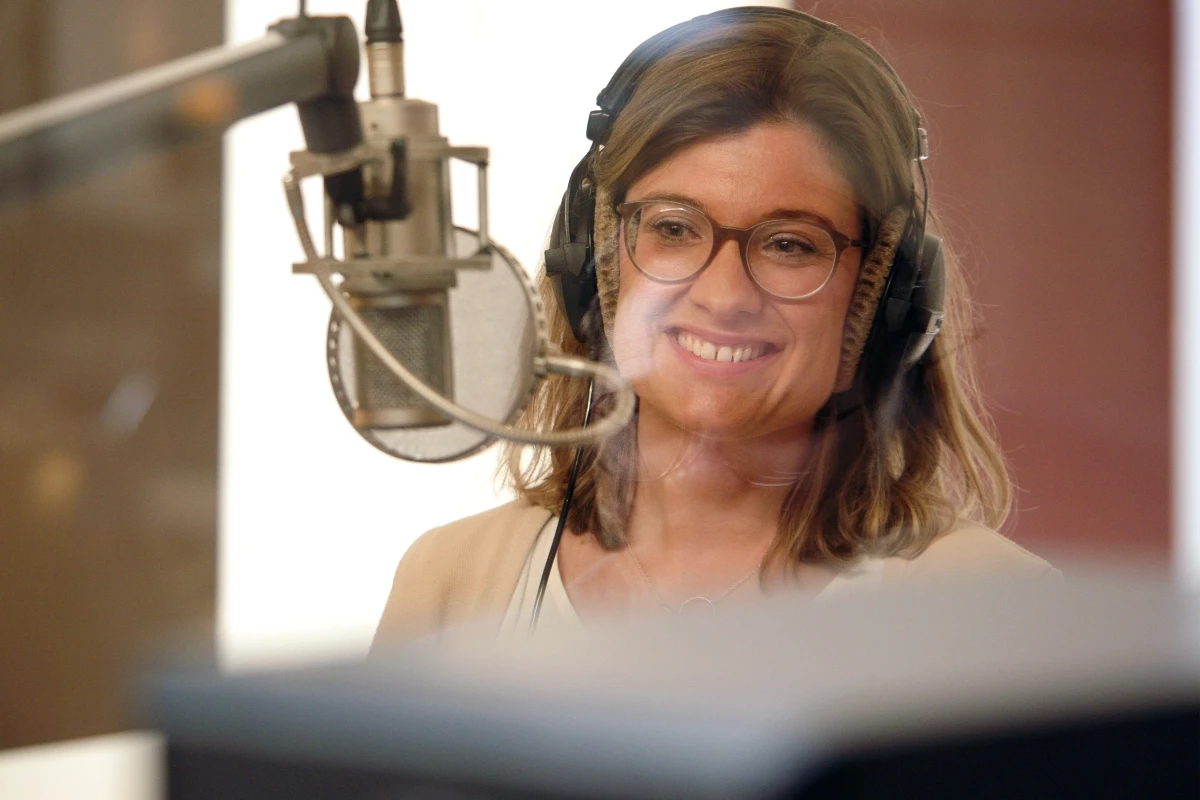

Jana Praum
Copied to clipboard!
This article was first published in the audio@media channel of the Digital Publishing Report.
Especially at a time when AI-based voice generators are increasingly entering the picture, it is becoming clear that acting talent and empathy for the genre and text are strong differentiators for outstanding human productions. A voice that conveys the content in the best possible way should therefore always be the result of a careful and targeted selection process — taking numerous factors into account.
Quality is essential, popularity isn't necessarily
The most important factor when choosing the right voice is undoubtedly the quality of the narration and acting. This forms the basis for working with most professional production houses. An experienced narrator brings nuance, emotion and depth of character that can bring a story to life — even if they are not necessarily a well-known name in the audiobook industry.
Many production houses routinely rely on familiar and established voices because this is considered a safe way to avoid mistakes.
However, our surveys show that, particularly among younger listeners, the names of narrators are becoming less memorable — what matters more is the quality of the voice itself. It therefore makes sense not to rely solely on previous productions or media presence, but to take the time to listen to and assess the nuances of the voice yourself.
Experienced talent can often be found among lesser-known voices — for example, actors from the theater — who impress with their emotional depth and flexibility and can also frequently be a smart choice from a cost perspective. A direct comparison allows you to form your own informed opinion and make the best possible choice.
"It often becomes clear that, particularly among younger listeners, narrator names are becoming less memorable — what matters more is the quality of the voice itself."
Never lose sight of the target audience
Choosing a voice is always a highly subjective matter. There is a risk of judging tone and speech flow according to your own preferences — but as the decision-maker, you do not necessarily represent the product's target audience.
A voice that sounds pleasant to the producer will not automatically generate the desired response from the target audience. This is where empathy and, where necessary, market research come into play: Which voices and speaking styles are currently popular within the genre? Does the tone of the voice fit the overall character of the material and speak to the intended age group?
The tools provided by Klangkantine Audiobooks support our publishing clients with this research, while experience and targeted searches across established audiobook platforms can also provide valuable insights.
The voice must not only sound technically clean and pleasant, but must also meet the stylistic and content requirements of the respective genre.
In short, adapting the voice to the target audience plays a crucial role. A narrator must not only sound technically clean and pleasant but — particularly when it comes to authenticity — must also meet the stylistic and content requirements of the respective genre.
A gripping thriller, for example, calls for a distinctive and compelling voice, while a nonfiction title requires clarity, subject-matter confidence and a strong command of foreign or specialist terminology.
With children's audiobooks, it is equally important for the narrator to be flexible, adapt their speaking pace to the needs of younger listeners and be able to move between different characters in a way that stimulates their imagination.
A voice that performs convincingly across different contexts plays a major role in creating a coherent and complete listening experience.
1+1=2? The special case of multi-voice casts
Beyond the requirements of the content itself, the interaction between multiple voices within a production must also be considered.
Books in the popular romance genre, in particular, are increasingly using different narrative perspectives, which also require multiple voices when producing the audiobook.
This requires careful coordination between the narrators involved. Different speaking styles and forms of emphasis can either enrich the overall result or — in the worst case — make the production feel inconsistent.
When selecting narrators, it is therefore important to consider how well their voices complement one another and whether they are capable of creating a believable and dynamic soundscape together.
How much should it cost? The question of price
In addition to the artistic selection, the economic aspect is also important. A careful cost-benefit analysis is essential to make the best use of the available budget.
The goal is to find the right balance between financial resources and expectations regarding experience and popularity.
A highly recognizable narrator may initially seem attractive, but the additional cost is not always justified if comparable, lesser-known talent can provide a similar level of quality.
This strategic investment lays the foundation for the audiobook's long-term success.
A highly recognizable voice may initially seem attractive, but the additional cost is not always justified if comparable, lesser-known talent can provide a similar level of quality.
Discussions around the use of AI in audiobook production often emphasize cost. While AI-based voice generators can contribute in certain areas and even make niche products viable, they still fall short of human narrators when it comes to emotional depth and authenticity.
AI-generated voices often sound monotonous and lack the variable, nuanced performance that an experienced narrator can provide.
And this gap is unlikely to disappear in the foreseeable future. While the use of TTS is expected to become increasingly normalized, this will not necessarily be the case for monetized productions.
For commercially distributed productions featuring human voices, it is therefore all the more important to prioritize quality without compromising artistic standards.
Modern workflows using tools such as Narrafix for automated audiobook editing and proofing also make it possible to improve quality while achieving significant cost savings — a development that will certainly continue in the future.
Conclusion: The perfect match as the key to success
The perfect match between content and narrator is a decisive factor in an audiobook's success.
For publishers and industry professionals, this means taking an in-depth look at the individual qualities of each narrator. It is not enough to rely solely on popularity or previous success.
Instead, the focus must be on a comprehensive assessment of vocal quality, suitability for the genre and target audience, and the narrator's ability to fit harmoniously into an ensemble.
Only then is it possible to produce an audiobook that is not only technically flawless, but also emotionally engaging and capable of remaining in listeners' memories over the long term.
Through informed and careful selection, publishers can ensure that their productions meet listeners' high expectations and achieve lasting success.
Ultimately, choosing the right audiobook narrator is an art that requires both artistic and economic considerations.
The right narrator is more than simply a vocal instrument — they convey emotions, moods and stories.
Through informed and careful selection, publishers can ensure that their productions meet listeners' high expectations and achieve lasting success.
In an era in which machine-generated TTS voices are becoming increasingly available for free, distinguishing human productions through superior quality will become even more important.
A clear commitment to quality creates genuine added value that resonates with listeners — value they are also willing to pay for.

